Repairs and service
Septic tank pumping and the 2030 rule
In Florida, septic tank pumping does not meet the Indian River Lagoon 2030 rule, which needs a sewer connection or an ENR upgrade. FDEP still says to have the tank inspected and pumped every 3 to 5 years by a state-licensed septage disposal service. Pumping is the best time to learn your tank size, condition and options.
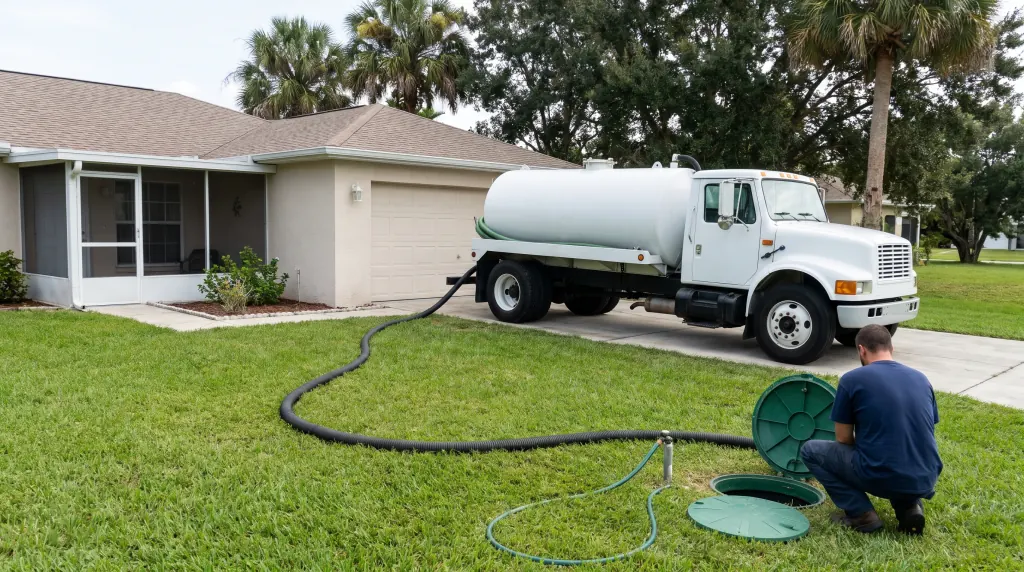
Pumping does not meet the 2030 rule
By July 1, 2030, homes on 10 acres or less inside the Indian River Lagoon program area must connect to central sewer if it is available, or upgrade to an enhanced nutrient-reducing (ENR) system that removes at least 65% of nitrogen. That is s. 373.469, Florida Statutes, as amended by HB 1417 in 2026. The law in plain English.
A pump-out empties the tank. It does not change the system type, so a freshly pumped conventional tank is still a conventional tank under the rule. Pumping still matters: a well-kept system is less likely to fail before you are ready to choose sewer or ENR. Run the free address check to see whether your home is inside the area.
How often to pump
The Florida Department of Environmental Protection's Septic System Owner's Guide says to have your septic tank inspected and pumped every 3 to 5 years by a state-licensed septage disposal service. It warns that excess solids or a clogged or damaged filter can cause a system to fail.
The same guide says homes that use a garbage disposal should have the tank checked more often than normal. It also says not to send water softener backwash into the system, and to keep downspouts and cars away from the tank and drainfield.
When the tank is pumped, the guide suggests marking where it is and taking a photo so you can find it next time. Keep the pumping receipt with your permit papers. Good records help when you sell.
Pumping is when you learn what you have
Most owners never see their system. Pumping is the one regular visit when the lid comes off and the tank is empty. FDEP's inspection procedure uses pumping to find a tank's capacity, and checks the empty tank for cracks, leaks, baffles or tees, the outlet filter, and the fit of the lid.
Ask the pumper to write down what they saw:
- Tank size in gallons, and whether it has one or two compartments.
- Condition: cracks, leaks, missing or loose baffles, a damaged lid.
- The outlet filter, if there is one, and whether it was cleaned.
- Drainfield signs: water backing into the tank, soggy ground, or sewage at the surface.
- System type: conventional tank and drainfield, or an aerobic or other advanced unit.
A pump-out is not a full inspection. If you are buying or selling, ask for a septic inspection, which adds a drainfield check and a signed written report.
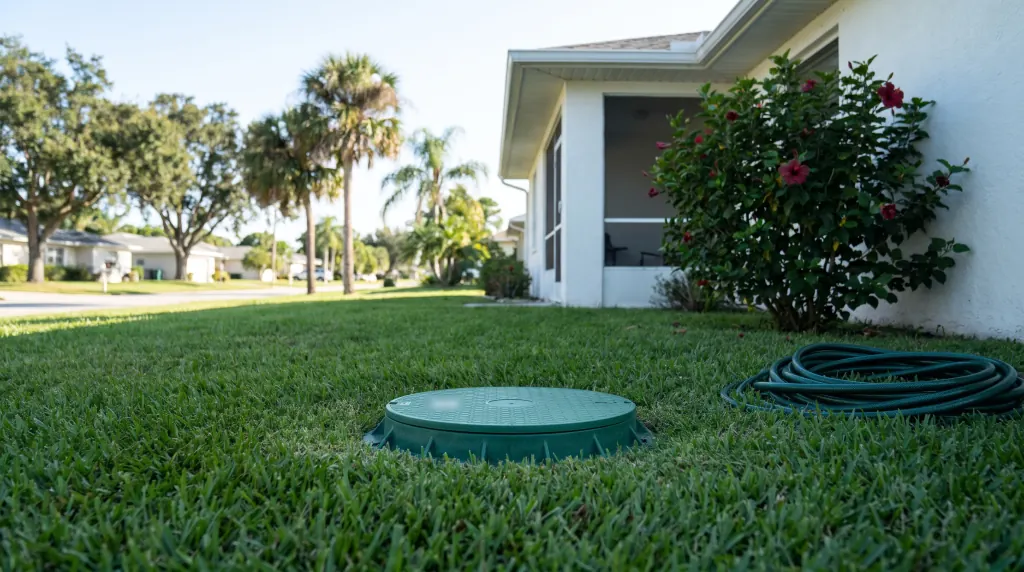
Five questions to ask your pumper about 2030
- Is my property inside the program area? The pumper may know the area, but check it yourself with the address check.
- Is my system conventional or ENR? Only an ENR system or a sewer connection meets the rule. The three ENR types are an aerobic NSF 245 unit, a nitrogen-reducing performance-based system, and an in-ground nitrogen-reducing biofilter.
- What condition is it in? An old tank or a tired drainfield changes the math. If it is close to failing, a repair is the natural moment to upgrade, and the permit office will remind you of the 2030 rule.
- Is sewer nearby? Where sewer is available, the rule points to sewer, not ENR. Your utility can say whether a line is planned for your street.
- Would an upgrade or a sewer connection make sense before the next repair? Ask for a rough idea of the cost of replacement or connection, and check grants before any work starts.
Does this apply to your home?
The free address check answers in about ten seconds: inside the program area or not, septic or sewer on record, lot size and, in Brevard, a grant estimate.
Aerobic and ENR systems still need care
Upgrading does not end maintenance. FDEP's owner's guide says aerobic treatment units (ATUs) and performance-based treatment systems (PBTS) have their own maintenance requirements in Florida, and to ask the county health department about them.
For aerobic units, Rule 62-6.012, Florida Administrative Code, requires:
- A current maintenance contract between the owner and an approved maintenance entity, as a condition of system approval. The first contract is for at least 2 years, and renewals are for at least 1 year, for the life of the system.
- Service visits at least twice a year by the maintenance entity (four times a year for commercial units), reported to the state.
The Florida Department of Health in Charlotte County adds that ATU owners keep an operating permit (DEP 4081) for the life of the unit and renew it every two years. Ask your county health department what applies where you live.
Do not assume an aerobic unit never needs pumping. Ask the maintenance company at each visit whether the tank is due. When you compare ENR quotes, ask what the yearly service contract costs and who provides it.
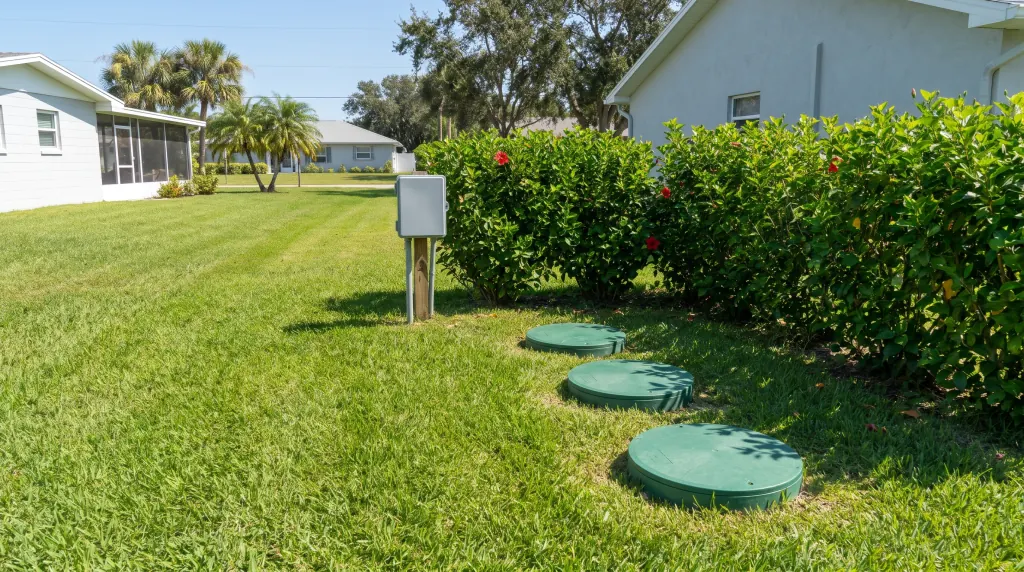
What pumping costs
Price depends on tank size, how deep and hard to reach the lid is, how far the truck must travel, and whether the filter, a riser or the drainfield needs work. UF/IFAS Extension in Franklin County wrote in 2017 that routine pumping every 3 to 5 years cost about $300 to $400. That figure is old and from the Panhandle, so use it only as a rough reference.
Before the truck comes, ask for a written price that says the tank size it covers, whether extra gallons or digging cost more, whether the filter is cleaned, and whether you get a written note of what they found.
Who may pump your tank
FDEP says registered septic tank contractors, and state-licensed plumbers, may pump septic tanks with an active service permit from the county health department. You can look up a contractor's registration and business authorization on FDEP's contractor search. More on choosing one: how to find a septic company.
Want the pump-out and the 2030 questions answered in one visit? Ask a licensed septic company that serves your area. The request goes to one company, free and with no obligation.
Your address, your answer
Find out what the 2030 rule means for your home
Type your address to see if it is inside the program area, whether state records show septic or sewer, your lot size and, in Brevard, an estimate of the county grant. Free, about ten seconds.
Questions people ask
How often should I pump my septic tank in Florida?
Every 3 to 5 years, according to the Florida Department of Environmental Protection's owner's guide. Pump sooner if you use a garbage disposal, because the guide says those homes should have the tank checked more often. A full house or a small tank also fills faster, so ask your pumper what your tank needs.
Does pumping my septic tank count toward the 2030 rule?
No. Pumping keeps a working system healthy, but it does not change what kind of system you have. Inside the Indian River Lagoon program area, the 2030 rule needs a sewer connection where available or an ENR system that removes at least 65% of nitrogen. Run the address check to see if it applies to you.
How much does it cost to pump a septic tank?
It depends on tank size, how easy the lid is to reach, and whether the drainfield or filter needs work. UF/IFAS Extension put routine pumping at about $300 to $400 in 2017, but that figure is old and from the Panhandle. Ask for a written price that says what is included before the truck comes.
Does an aerobic septic system need pumping?
Do not assume it never does. Florida requires an aerobic unit to have a maintenance contract with an approved maintenance entity, which inspects it at least twice a year. Ask that company at each visit whether the tank needs pumping and when it was last pumped.
Who is allowed to pump my septic tank?
FDEP says registered septic tank contractors, and state-licensed plumbers, may pump septic tanks if they hold an active service permit from the county health department. You can check a contractor's registration on FDEP's contractor search before you book.
Sources
The laws, agency documents and reports this page relies on. Rules and grant amounts change; confirm with your county before you sign anything.
- Septic System Owner's Guide, Florida Department of Environmental Protection
- Septic contracting frequently asked questions, Florida Department of Environmental Protection
- Rule 62-6.012, F.A.C.: Standards for the construction, operation, and maintenance of aerobic treatment units (effective June 21, 2022), Florida Department of State
- Aerobic treatment units (ATUs), Florida Department of Health in Charlotte County
- Procedure for voluntary inspection and assessment of existing systems (May 2000), Florida Department of Environmental Protection
- s. 373.469, Florida Statutes, Florida Senate
- HB 1417 (2026), Chapter 2026-2, Laws of Florida, Florida Senate
- Maintain your septic system to save money and reduce water pollution (May 1, 2017), UF/IFAS Extension Franklin County
- Septic tank contractor registration links (contractor and business search), Florida Department of Environmental Protection
Related
Septic tank and drainfield repair in the lagoon area
Septic repair inside Florida's Indian River Lagoon area: what a repair permit triggers today, the 2030 notice, repair or replace, and when to call a pro now.
Septic inspection when you buy or sell
What a Florida septic inspection covers, what fails one, who pays, how long it takes, and the 2030 Indian River Lagoon questions buyers and agents should add.
How to choose a septic company
Check a Florida septic contractor's registration, ask about ENR and permits, get written quotes and spot red flags before the 2030 Indian River Lagoon upgrade.
Nitrogen-reducing (ENR) septic systems: the three approved types
The three kinds of nitrogen-reducing septic systems Florida approves (INRB, aerobic NSF 245, PBTS): how they work, cost ranges, upkeep and quote checks.