The law
Florida's 2030 septic law, in plain English
The Indian River Lagoon septic rule is s. 373.469(3)(d)2., Florida Statutes. By July 1, 2030, commercial properties and homes on 10 acres or less with septic in the program area must connect to sewer if available or switch to a system removing at least 65% of nitrogen. HB 1417 (2026) removed homes over 10 acres. The date did not change.
The rule
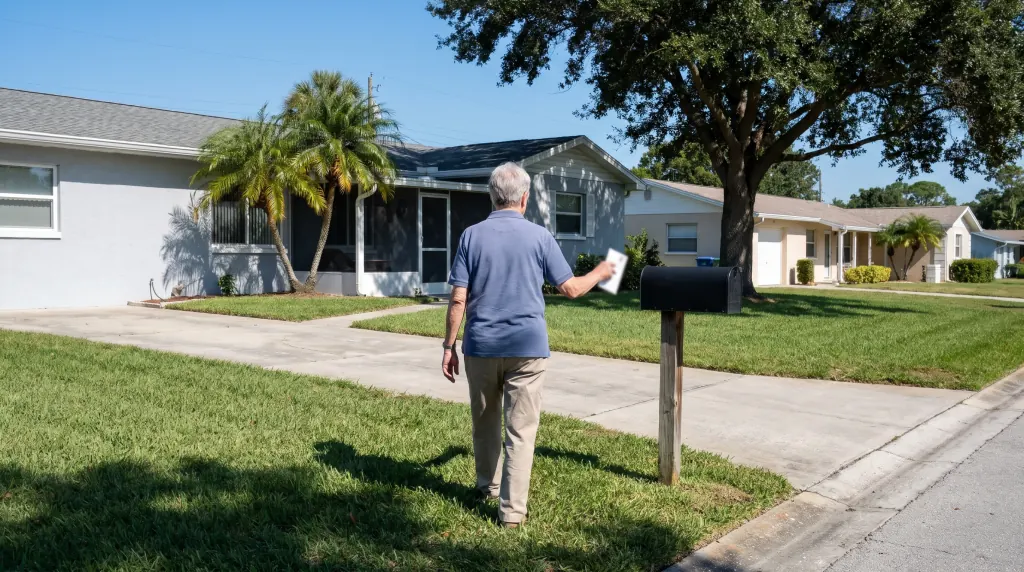
By July 1, 2030, any commercial property or any residential property of 10 acres or less with an existing septic system inside the four lagoon plan areas must connect to central sewer if available, or upgrade to an enhanced nutrient-reducing system or other system that achieves at least 65 percent nitrogen reduction.
That is s. 373.469(3)(d)2., Florida Statutes, as amended by HB 1417 in 2026 (Chapter 2026-2, effective July 1, 2026). The four plan areas are the Banana River Lagoon, Central Indian River Lagoon and North Indian River Lagoon basin management action plans (BMAPs) and the Mosquito Lagoon reasonable assurance plan.
Why the rule exists
Where the nitrogen from a septic system goes
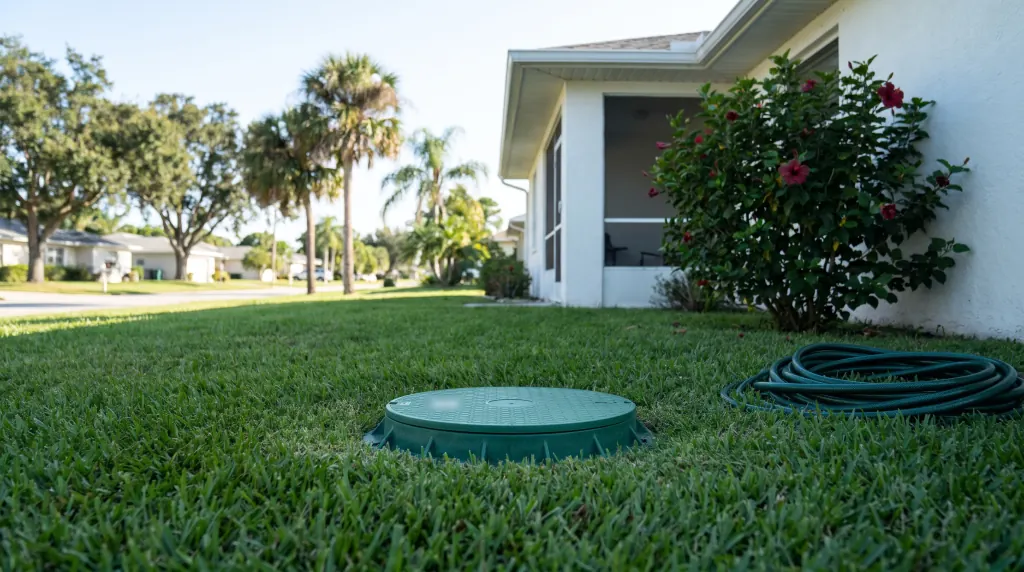
- 1Septic tankSolids settle in the tank. The liquid flows on to the drainfield.
- 2DrainfieldThe liquid soaks down into the soil. A standard system is not built to remove most of its nitrogen.
- 3Water tableBelow this line the ground is full of water.
- 4GroundwaterFDEP lists discharge from conventional septic systems as one of many sources of nitrogen in Florida's groundwater.FDEP ENR fact sheet, Dec 2023
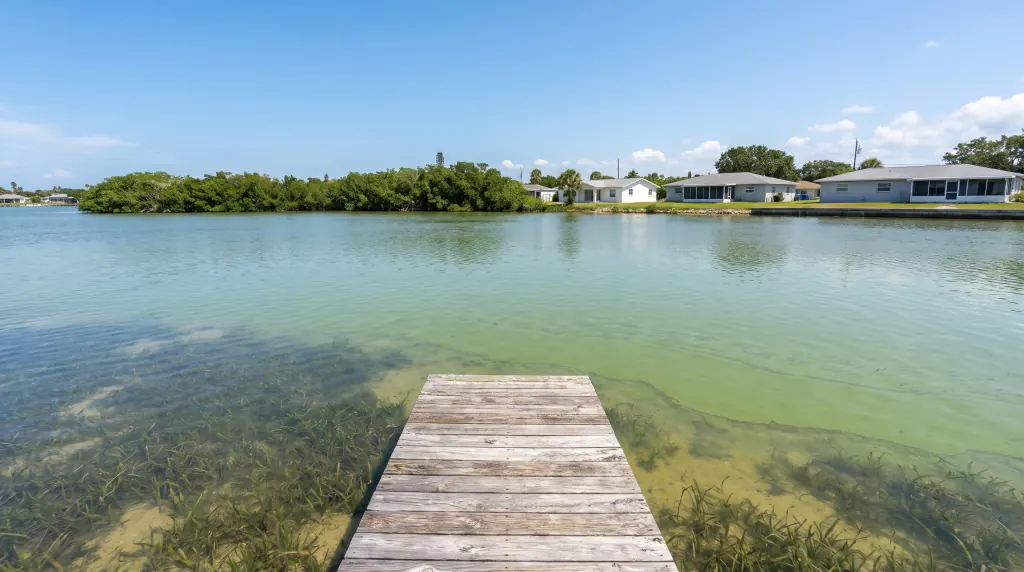
- 5The lagoonState law names septic systems among the causes of excess nutrients entering the Indian River Lagoon. High levels of nitrogen have killed off seagrass there.s. 373.469(1)(a)2., F.S.; WUSF, Dec 18, 2025
The 2030 rule works on step 2. Connect to sewer if it is available, or add treatment that removes at least 65% of the nitrogen before it reaches the groundwater (s. 373.469(3)(d)2.).
Dates and claims that are wrong
These show up in older articles, contractor pages and AI answers. Each line below was checked on November 1, 2026 against the text it cites.
| You may read | What the law says | The line that says so |
|---|---|---|
| The deadline is January 1, 2030 | July 1, 2030 | s. 373.469(3)(d)2., F.S.: "By July 1, 2030, any commercial property or any residential property of 10 acres or less..." FDEP's December 2023 fact sheet says January 1, 2030; the statute controls. |
| The deadline was extended to 2035 | Still July 1, 2030 | HB 1417 as enrolled, Chapter 2026-2, lines 181 to 183: "By July 1, 2030". |
| Every residential or commercial property of any size is covered | Since July 1, 2026: commercial property of any size, and homes on 10 acres or less | HB 1417 (2026) amended s. 373.469(3)(d)2. Before that, the law covered "any commercial or residential property". |
| Commercial property over 10 acres is exempt | Only residential property over 10 acres is out | "any commercial property or any residential property of 10 acres or less" (s. 373.469(3)(d)2., as amended). |
| Martin or Palm Beach County is included | Only parts of Brevard, Indian River, St. Lucie and Volusia | FDEP ENR FAQ (December 2023): "portions of Volusia, Brevard, Indian River and St. Lucie Counties". Our parcel count finds none in Martin, Palm Beach or Okeechobee. |
| FDEP's Septic Upgrade Incentive Program pays here | That program is for springs priority focus areas | FDEP's program announcement. Lagoon money is local: see septic grants. |
| The North IRL septic permit ban is still in force | Vacated on October 8, 2026 | 11th Circuit opinion, No. 25-11612 (GovInfo). Where the case stands. |
| Owners will be fined for missing 2030 | No penalty is written into the law | s. 373.469 has no penalty clause and no enforcement process for the 2030 date. |
Spotted another one? Tell us through our corrections policy.
Who is covered
- Homes on 10 acres or less with a septic system inside the program area.
- Commercial property of any size with a septic system inside the area.
- Working systems too. The rule does not wait for a failure.
Not covered: homes already on central sewer, homes on more than 10 acres (removed by the 2026 amendment), and systems that already meet the ENR standard. Property outside the program area is not covered at all. That includes all of Martin, Palm Beach and Okeechobee counties and most of Port St. Lucie.
What counts as compliant
You have two ways to comply, and the law picks between them for you:
- Connect to central sewer, if it is available. "Available" uses the definition in s. 381.0065(2)(a), F.S. Your utility or county health department can tell you whether sewer counts as available at your lot.
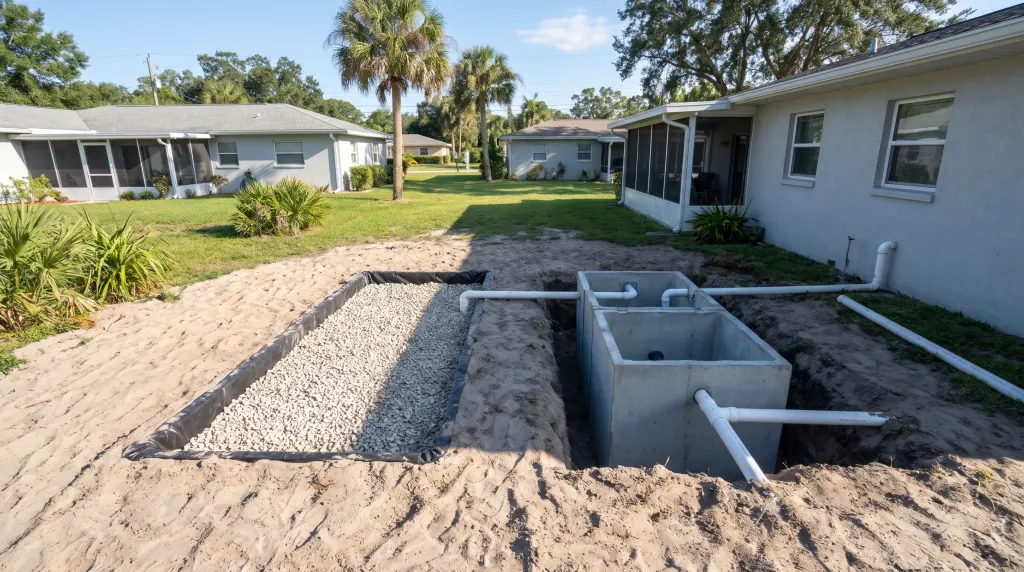
- If sewer is not available, upgrade to an ENR system. The statute defines ENR as a system approved by FDEP that removes at least 50% of total nitrogen before the drainfield, or at least 65% combined across tank and drainfield (s. 373.469(2)(b)). See the three approved types.
Does this apply to your home?
The free address check answers in about ten seconds: inside the program area or not, septic or sewer on record, lot size and, in Brevard, a grant estimate.
Rules already in force
- New systems since January 1, 2024: inside the program area, a new septic system is not allowed where sewer is available. Where it is not, only ENR systems are allowed, on any size lot (s. 373.469(3)(d)1.).
- The North IRL court case: a federal court order stopped new septic permits in the North IRL and required ENR for repairs there from July 17, 2025, until the 11th Circuit set it aside on October 8, 2026 and sent the case back to the district court. Rules there could change again. Details.
- Repairs today: with the court order set aside, a repair alone does not trigger ENR under state law in any plan area, unless the replacement is permitted as a new system. The 2030 date does. Ask your county health department what applies to your permit. More on septic repairs before 2030.
- A notice at permit time: since July 1, 2026, when you apply to repair, modify or replace a conventional system on a covered property, the permitting agency must tell you about the 2030 requirement (HB 1417).
How we got here
Six dates, from the first ENR rule to the 2030 deadline
- HB 1379 takes effectNew septic systems on lots of one acre or less inside any basin management action plan area must be ENR systems.FDEP HB 1379 fact sheet
- New systems in the lagoon areaNo new septic where sewer is available. Where it is not, only ENR systems, on lots of any size.s. 373.469(3)(d)1., F.S.
- North IRL court orderA federal court orders FDEP to stop new septic construction permits in the North IRL; FDEP listed repairs there as needing ENR. The 11th Circuit set the order aside on October 8, 2026.Bear Warriors United v. FDEP; FDEP table, Feb 2026
- HB 1417 takes effectHomes on more than 10 acres are out. A repair application now brings a written notice about 2030.HB 1417 (2026), Ch. 2026-2
- Appeals court sets the ban asideThe 11th Circuit vacated the North IRL permit ban and sent the case back to the district court. Rules there are in flux; check with your county.Talk of Titusville, Oct 8, 2026; Law360
- The deadlineConnect to central sewer if it is available, or upgrade to an ENR system that removes at least 65% of nitrogen.s. 373.469(3)(d)2., F.S.
Septic rules elsewhere in Florida
If you landed here from a statewide search: the 2030 deadline is a lagoon rule. Across Florida, a separate rule from HB 1379 (2023) says new septic systems on lots of one acre or less inside any basin management action plan area must be ENR systems, since July 1, 2023 (FDEP ENR FAQ). Springs basin plans add their own requirements for existing systems. Outside those areas, standard Florida septic permitting by the county health department applies. FDEP's OSTDS requirements map shows which rule covers a location.
Variances and appeals
FDEP says the usual septic variance in s. 381.0065(4)(h) is not available for the ENR requirement. An affected owner can petition for an administrative hearing under ss. 120.569 and 120.57, F.S., which may or may not change the outcome.
What is still unsettled
- Penalties and enforcement. The statute has no penalty clause and no enforcement process for the 2030 date. We found no published rule that says how it will be enforced. We do not repeat fine amounts nobody can cite.
- The date itself. Sebastian has asked for a 2045 to 2050 deadline, and Indian River County leaders have called 2030 unreasonable. The 2026 Legislature changed who is covered but kept the date. A further change is possible; we will update this page if it happens.
- Local rules can come sooner. Counties and cities can require connection where sewer reaches your street, often with a one-year notice. See your county guide.
Your address, your answer
Find out what the 2030 rule means for your home
Type your address to see if it is inside the program area, whether state records show septic or sewer, your lot size and, in Brevard, an estimate of the county grant. Free, about ten seconds.
Questions people ask
Did HB 1417 push the deadline to 2035?
No. HB 1417 as enrolled (Chapter 2026-2, lines 181 to 183) keeps "By July 1, 2030". It narrowed who is covered (homes on more than 10 acres are out) and added a notice at repair permits. It did not move the date.
Is commercial property over 10 acres exempt?
No. The 10-acre limit applies only to residential property. The law covers "any commercial property or any residential property of 10 acres or less" with an existing septic system in the program area.
Does HB 1379 or HB 1417 set the 2030 deadline?
HB 1379 (2023, Chapter 2023-169) created s. 373.469 and the July 1, 2030 deadline. HB 1417 (2026, Chapter 2026-2) amended it: it took out homes on more than 10 acres and required the repair-permit notice. The deadline in force is in s. 373.469(3)(d)2., F.S.
Is the deadline January 1 or July 1, 2030?
July 1, 2030. FDEP's December 2023 fact sheet says January 1, 2030 and some articles copied it, but the statute says "By July 1, 2030".
Does the 2030 rule apply everywhere in Florida?
No. It applies only inside the Indian River Lagoon program area, in parts of Brevard, Indian River, St. Lucie and Volusia counties. Elsewhere, other rules apply, such as ENR for new systems on lots of one acre or less inside other basin plans.
Sources
The laws, agency documents and reports this page relies on. Rules and grant amounts change; confirm with your county before you sign anything.
- s. 373.469, Florida Statutes: Indian River Lagoon Protection Program, Florida Senate
- HB 1417 (2026), enrolled text, Chapter 2026-2, Laws of Florida, Florida Senate
- ENR requirements for septic systems, BMAP tables (February 2026), Florida Department of Environmental Protection
- Frequently asked questions: HB 1379 requirements for ENR systems (December 2023), Florida Department of Environmental Protection
- BMAPs and Alternative Restoration Plans: OSTDS requirements map, Florida Department of Environmental Protection
- Florida's septic mandate concerns Sebastian city officials, Sebastian Daily
- ENR OSTDS fact sheet (December 19, 2023), Florida Department of Environmental Protection
- Bear Warriors United, Inc. v. Secretary, Florida Department of Environmental Protection, No. 25-11612 (11th Cir. Oct. 8, 2026), U.S. Government Publishing Office (GovInfo)
- DEP announces Septic Upgrade Incentive Program, Florida Department of Environmental Protection
- Indian River County homeowners face costly sewer mandate, CBS12
Related
The North IRL septic court order, and where it stands now
A federal order stopped new septic permits in the North Indian River Lagoon from July 2025. The 11th Circuit vacated it on October 8, 2026. What applies now.
ENR upgrade or sewer connection?
Under the 2030 lagoon rule you connect if sewer is available and upgrade to ENR if not. How to tell which applies, side-by-side costs, and when to wait.
Questions people ask about the 2030 septic rule
Straight answers about Florida's 2030 lagoon septic rule: penalties, the 10-acre rule, aerobic systems, grants, selling, and whether the date will move.
Which counties and cities are covered
Which parts of Brevard, Indian River, St. Lucie and Volusia are inside the 2030 lagoon septic area, septic parcels by city, and the help in each county.
Septic tank and drainfield repair in the lagoon area
Septic repair inside Florida's Indian River Lagoon area: what a repair permit triggers today, the 2030 notice, repair or replace, and when to call a pro now.
Indian River Lagoon septic parcels by county, plan area and ZIP code (2026)
About 101,000 septic parcels sit inside Florida's Indian River Lagoon program area. Tables by county, plan area and ZIP code, our method, and CSV downloads.